What AI Solutions Actually Work for Small Businesses?
Everyone’s talking about AI. And if you’re a small business owner, you’ve probably felt the pressure to do something with it, even if you’re not entirely sure what.
I work with small businesses every day helping them figure this out. And I’ll be honest: a lot of what’s being sold to business owners right now isn’t going to help them. So I want to cut through the noise and tell you what I’m actually seeing work.
The biggest misconception I hear
The number one thing business owners come to me believing is that AI can replace their employees. Quickly, cheaply, and with minimal effort.
It’s not true. Not yet, anyway.
Here’s the reality: humans carry an enormous amount of native understanding that AI just doesn’t have. Your team knows your clients, your quirks, your unwritten rules. Getting AI to replicate that involves a huge amount of guardrailing and managing. You can spend more time wrangling an AI to complete a complex task than it would’ve taken a human to just do it.
That doesn’t mean AI isn’t useful. It means the question isn’t “can AI replace my staff?” It’s “where can AI take the heavy lifting off my staff?”
What’s actually working: a real example
One of my favourite examples is a local tile installer I worked with. He wanted to show prospective clients what their bathroom could look like after he’d done the work. Visual mockups he could attach to quotes so people could really picture the end result.
We built him an AI bathroom tile visualiser. A client sends a photo of their bathroom, and the tool generates a realistic preview of what it would look like with new tiles fitted.
Before we built it, he was closing around 6 out of every 10 quotes. After? It’s closer to 9 out of 10.
That’s not AI replacing anyone. That’s AI doing something that wasn’t practical to do manually, and it directly moved the needle on revenue.
The universal starting point
That bathroom example is a custom build. But there’s a simpler place most small businesses can start right now, with almost no cost or technical knowledge: just use an LLM.
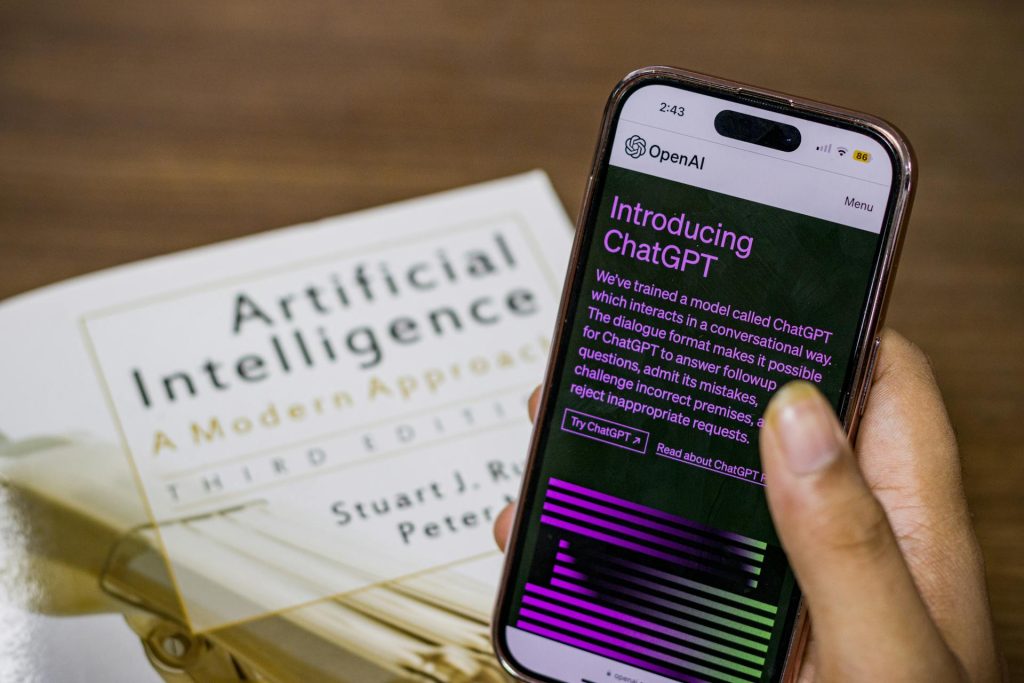
Tools like Claude or ChatGPT can read complex data and give you fast, actionable insights. Got a spreadsheet full of conversion data? Paste it in and ask what’s working. Got a long document you need the key points from? Done in seconds.
What I’m seeing across most small businesses is that LLMs work brilliantly as labour savers. Tasks that used to eat hours, summarising reports, writing first drafts, making sense of messy data, can be knocked out in minutes. You don’t need a developer. You don’t need a big budget. You just need to start using it.
How humans and AI actually work together
So if AI isn’t replacing people, what’s it doing?
I’ve started thinking about it this way: humans are becoming connectors and validators.
Humans have the knowledge. AI has the capability. What works is when humans direct AI to complete a task, take that output, and connect it to somewhere useful. A CRM, a quote, a client email, whatever. The human isn’t doing the grunt work. The AI is. But the human is making sure the output lands in the right place.
The validation piece is just as important. Because AI doesn’t know what it doesn’t know. Your team does. They can look at an AI’s output and catch what’s wrong based on experience and context the AI simply doesn’t have access to. That human layer of oversight isn’t a weakness in the system. It’s what makes the system trustworthy.
When AI goes wrong
The biggest failure mode I see is businesses using AI for the sake of using AI.
AI is a tool. Like any tool, it’s only useful if you actually need it. I’ve seen businesses sink real money into AI solutions that are essentially a very expensive, roundabout way of doing exactly the same work they were doing before.
If you don’t know where your inefficiencies are, AI isn’t going to reveal them for you. You’ll just end up automating confusion.
How I figure out where AI should go in a business
When I work with a client, I use a framework that maps out every role in the business and identifies which tasks are repetitive and time-consuming across the course of a month. Then we score each of those tasks by how feasible it would be to hand them off to AI.
You go through the whole business, every employee, every process, and by the end you have a clear picture of where AI can actually help versus where it would just add friction. That’s your roadmap. That’s where you start.
What does it actually cost?
For meaningful AI tools that can do real heavy lifting, I’d budget somewhere between £200 and £500 a month. That’s not nothing, but if you’re using it right, the efficiency you unlock should comfortably cover it, and then some.
The mistake is spending that money before you’ve done the mapping exercise above. Spend it in the right places and the ROI is obvious. Spend it in the wrong places and it just feels like an expensive experiment that didn’t work.
Who should own AI adoption inside your business?
In my experience, it needs to be someone who is over the business — not just working in it day to day. Typically that’s the owner or managing director. Someone who understands all the components of the business and can see how the pieces fit together.
That said, this ownership can scale down. Per department, per manager, even per person. Anyone who has genuine ownership of a task or process can work with us to automate it. The key is that they have to understand what the task involves. You can’t automate what you can’t describe.
What’s changed in 2026
Something genuinely significant has shifted this year: AI agents have become a lot more practical.
The arrival of what’s being called “skills”, the ability for AI agents to connect to and interact with almost any tool or platform, from your bank to your CRM to your calendar, means AI can now take a real, functional role inside a business. Not just as a chatbot sitting on the side, but as something that actually does work inside your existing systems.
We’re still in the early days of this. But the gap between “AI as assistant” and “AI as team member” is closing faster than most people realise.
Where to start if you’re reading this and feeling overwhelmed
Here’s what I’d suggest as a first step, and it costs nothing.
Open Claude or ChatGPT and ask it to interview you about the most time-consuming processes in your business. Just have the conversation. Then ask it to map out how easily AI could take on each of those tasks.
You’ll end up with a surprisingly useful picture of where the opportunities are. After that, talk to someone who can actually implement it. That’s when things get interesting.
AI isn’t magic. It’s not going to transform your business overnight, and it’s definitely not going to replace your team any time soon. But used in the right places, on the right problems, it genuinely works. The businesses I see getting the most out of it aren’t the ones chasing the hype. They’re the ones who took the time to understand their own inefficiencies first.
That’s always the right place to start. If you’re interested in talking AI with me you can check out my services here.
Need an AI consultant? Hire me.